

The Solution Architecture Theory
“Fewer complaints, more processes”
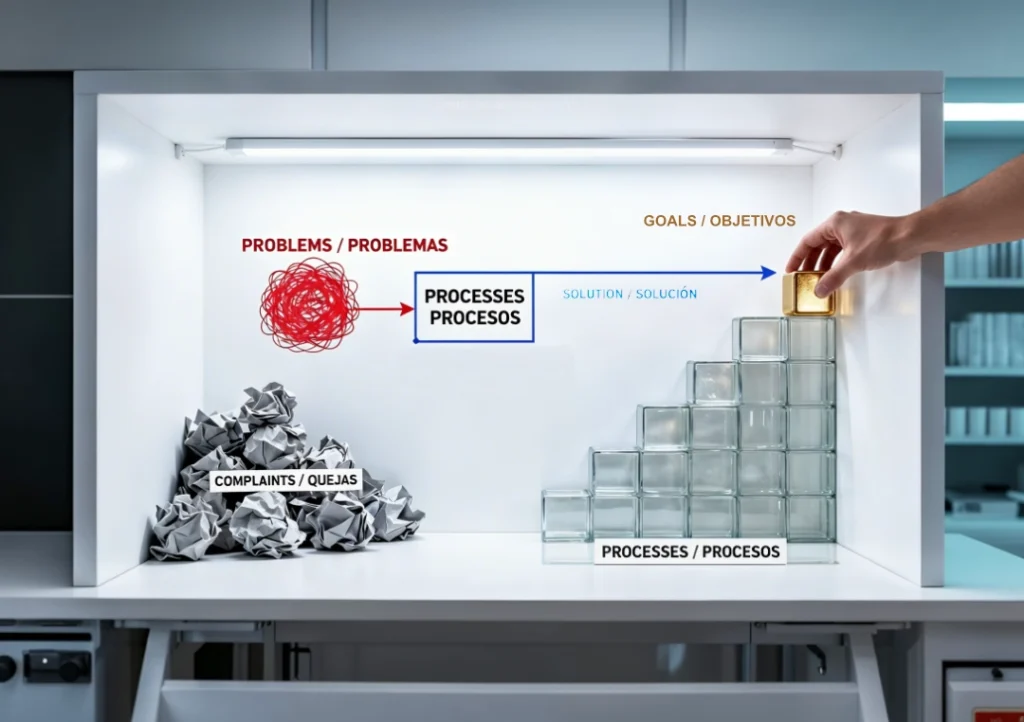
This theory posits that complaining is a symptom of a poorly designed system. It maintains that emotional exhaustion arises where the process ends. Therefore, the solution to recurring conflicts—both in business and in personal life—is not lamentation, but the design of a protocol that prevents the error from happening again.
1. The Premise: Complaining as an Energy Leak
We tend to believe that expressing our dissatisfaction solves the problem. The theory argues that complaining without a proposed adjustment is merely noise that consumes resources. If something bothers you more than twice, it is no longer an isolated event; it is a design flaw that requires a process.
2. The Foundation: Applied Systems Thinking
-
Process as a Firewall: In marketing and project management, an error is an opportunity to patch the system. If a client doesn’t understand a report, the solution isn’t to complain about their lack of attention, but to redesign the information delivery process.
-
Personal Life as a Project: Surprise: processes aren’t just for corporations. Organizing finances, health, or family dynamics through processes reduces cognitive load and eliminates the need for complaining. Order creates space for enjoyment.
-
Radical Accountability: Replacing complaints with processes is about regaining control. The one who complains is a victim; the one who processes is an architect.
3. Practical Application: From Reactivity to Design
At Cr8, we apply solution architecture to eliminate friction:
-
Anti-Friction Protocols: Every time we detect a pain point with a client or team, we create a step in the process to prevent it.
-
Automating Well-being: we use productivity tools so that repetitive tasks don’t turn into complaints about a lack of time.
-
A Culture of Proposals: In our agency, a complaint must be accompanied by a process draft. Without a proposal for improvement, there is only noise.
0 Comments